ADHD is not a trend. It’s a life.
- Unknown Medic
- 5 hours ago
- 2 min read

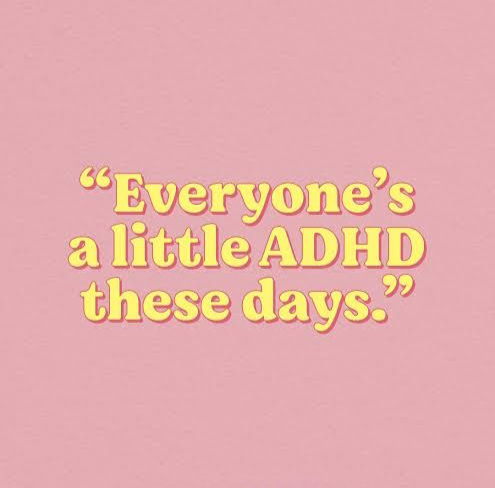
People often say things like, “I must have ADHD,” or “I googled the symptoms and I definitely have it.” And while that might be meant casually, it can feel frustrating—and even insulting—to people who genuinely live with ADHD every day. ADHD isn’t a trend, and it isn’t a quirky personality trait.
One part that’s talked about far less is what some call the “dark side” of ADHD in women: the severe, often hidden, long-term impact of ADHD that goes undiagnosed or unsupported. Because women’s symptoms are more likely to be internalised rather than outwardly “hyperactive,” many spend years pushing through in silence—carrying chronic stress, shame, and burnout.
For many women, this can look like:
- Emotional and mental health struggles: persistent shame, low self-esteem, rejection sensitivity, anxiety, depression, disordered eating, and in some cases self-harm or suicidal thoughts.
- Social and relationship challenges: masking to appear “fine,” then crashing into burnout; strained relationships; isolation; and increased vulnerability to bullying or unhealthy relationships.
- Daily life overwhelm: time blindness, constant mental clutter, impulsive coping behaviours, financial or organisational chaos for some—and symptoms that can worsen around hormonal changes.
- Delayed diagnosis: many women aren’t diagnosed until their 30s or 40s, often after years of being labelled “lazy,” “scattered,” or “too sensitive,” and grieving the support they never had.
One misconception I see a lot is that ADHD automatically means being messy and disorganised. For me, it can be the complete opposite. I can be *too* organised and *too* clean—so much so that it becomes obsessive. If things aren’t in order, I can’t focus on anything else. I fixate on what’s out of place, what needs cleaning, what needs sorting—whether it truly needs doing or not. In my head, it does.
And that doesn’t switch off. It follows me into the night, making sleep difficult. Even with medication, I can wake up multiple times with the same looping thoughts about what I “need” to do.
So when people reduce ADHD to a joke, a trend, or a stereotype, it erases the reality: for many women, ADHD isn’t loud—it’s relentless. It’s exhausting. And it deserves to be understood properly.

Comments